Bartnictwo – the practice of keeping bees in hollows carved directly into living trees – is one of Poland's oldest and most distinctive cultural traditions. For centuries it sustained forest communities across Central Europe, providing honey, wax, and a deep connection between people and the forest ecosystem. By the twentieth century, it had all but disappeared.
Today, thanks to the work of a small number of dedicated practitioners – bartniki – the tradition is being carefully revived. We sat down with our lead bartnik to understand what the craft involves, why it matters, and what it takes to bring it back to life in the forests of Lower Silesia.
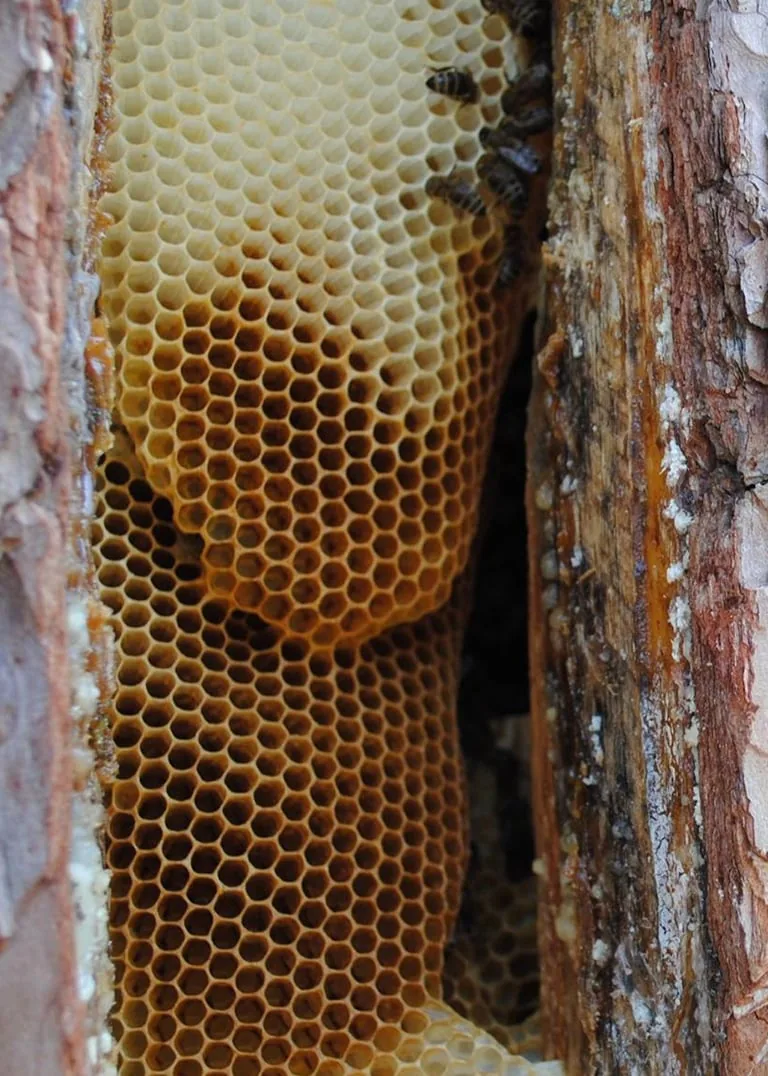
A bartnik works with living trees – typically old oaks, lindens, or pines – carving a hollow called a barć directly into the trunk. The hollow is shaped and sized to mimic the natural cavities that wild bees seek out, with a small entrance hole, a deep internal chamber, and a wooden cover that the bartnik can open to harvest honey without destroying the colony.
Unlike modern hive beekeeping, bartnictwo is an extremely low-intervention practice. The bartnik does not manage the colony in the modern sense – there is no frame manipulation, no queen replacement, no artificial feeding. The bees are essentially wild, living in a tree cavity that has been prepared for them. The bartnik's role is to provide the cavity, protect it from predators, and harvest a modest portion of the honey each autumn – leaving the colony with enough stores to survive the winter.
The result is honey that is genuinely different from conventionally produced honey – darker, more complex, rich with the flavours of the forest flowers that the bees forage on. It is also produced in tiny quantities, which is why it commands such high prices when it does reach the market.
Bartnictwo matters for reasons that go well beyond the production of exceptional honey. It represents a model of human–nature interaction that is genuinely sustainable: a practice that has coexisted with forest ecosystems for centuries without degrading them.
The barcie themselves – the carved tree hollows – provide habitat not just for bees but for a wide range of other cavity-dwelling species. Old barcie that are no longer actively managed by a bartnik become natural tree hollows over time, indistinguishable from those created by woodpeckers or natural decay. In this way, the bartnik's work contributes directly to the structural complexity of the forest.
There is also a cultural dimension that we take seriously. Bartnictwo is listed by UNESCO as an Intangible Cultural Heritage of Humanity. Reviving it is an act of cultural memory as much as an act of conservation – a way of maintaining a living connection to the people and practices that shaped the forests of Central Europe over centuries.
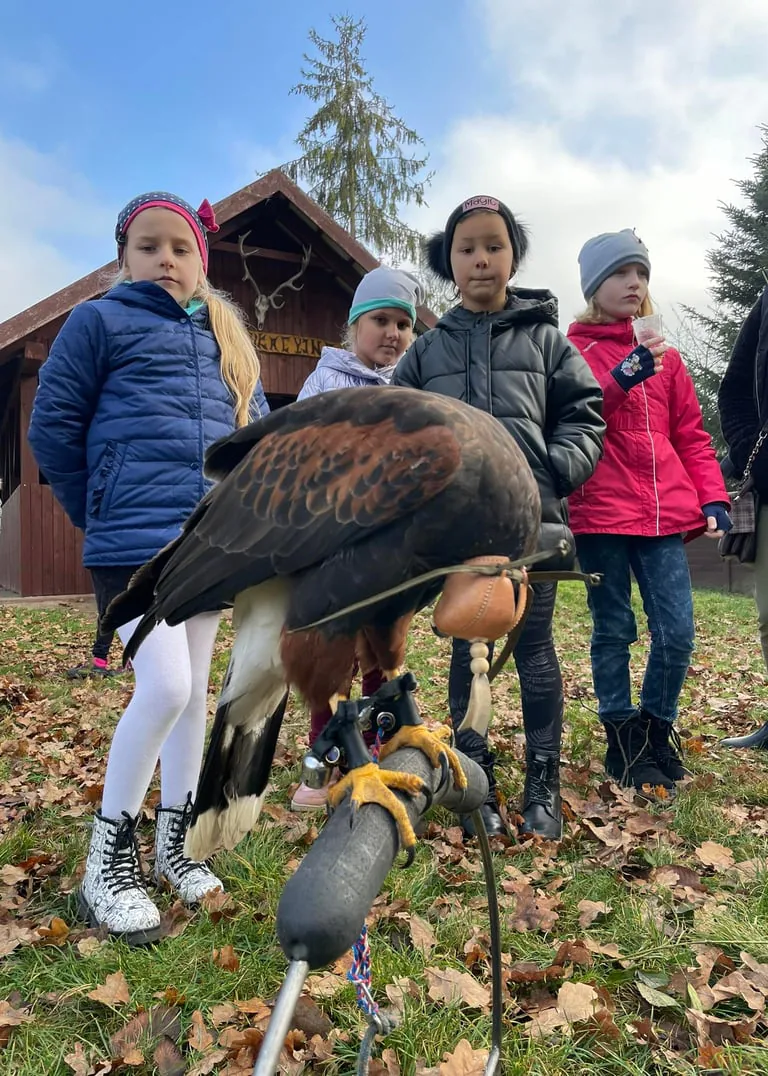
Join one of our guided bartnictwo workshops in the forest. Learn directly from our lead bartnik how barcie are carved, maintained, and harvested.
Our annual honey harvest events give participants the chance to taste genuine barć honey and compare it with conventionally produced varieties.
We offer talks and presentations on bartnictwo for schools, universities, and cultural organisations. Contact us to arrange a visit.
Maintaining barcie in living trees requires specialist tools, training, and time. Your donation helps us keep this ancient tradition alive.
If you own or manage woodland in Lower Silesia, we would love to discuss whether it might be suitable for new barcie. We handle all the work.
We are building an archive of bartnictwo knowledge, images, and oral histories. Photographers, filmmakers, and researchers are welcome to collaborate.
Whether you want to experience a forest workshop, taste barć honey, or learn more about supporting this extraordinary tradition – we would love to hear from you.